Commercial Sanitizing vs. Disinfecting: What Your Facility Really Needs
Commercial cleaning is the professional cleaning of non-residential spaces, including offices, schools, medical practices, warehouses, churches, retail suites, and multi-tenant buildings. Unlike residential cleaning, it is built around business operations, higher-traffic spaces, specialized equipment, safety protocols, and consistent service schedules.
For Atlanta businesses, the right commercial cleaning partner does more than keep a facility looking presentable. They help protect employee health, maintain flooring and finishes, support tenant satisfaction, and create a more professional experience for everyone who enters the building.
This guide explains what commercial cleaning includes, how it differs from janitorial and residential cleaning, and what to look for when choosing a dependable commercial cleaning company in Atlanta.
What Is Commercial Cleaning (and How Is It Different from Residential Cleaning)?
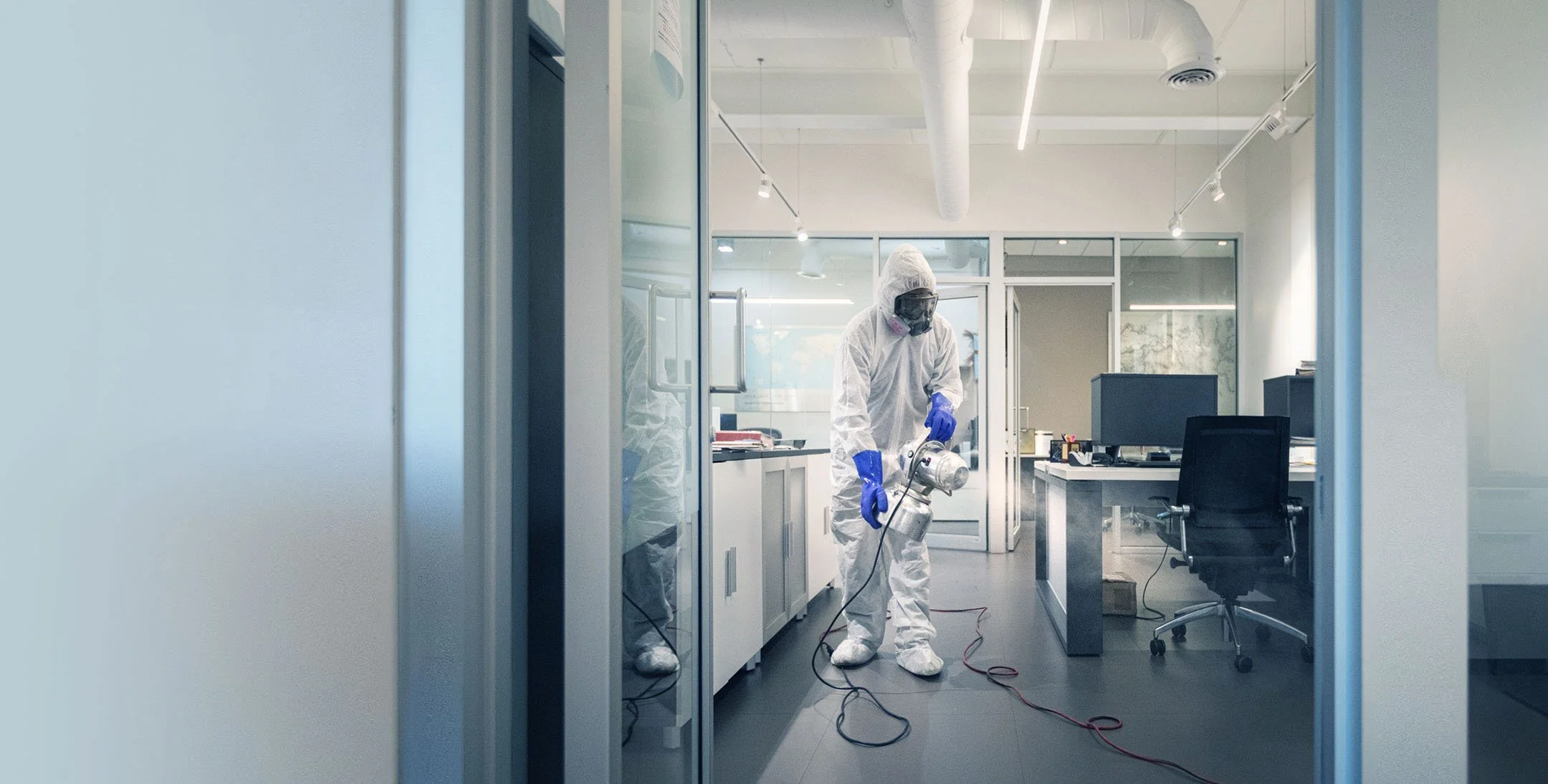
In commercial environments, sanitizing and disinfecting are not interchangeable, even though they're often used that way. Cleaning removes soils so chemistry can work, sanitizing reduces certain bacteria to public health-safe levels, and disinfecting goes further by killing a broader range of pathogens on hard, nonporous surfaces when used correctly. Pro Squared Janitorial supports facility and property managers across Atlanta first and the greater metro area, with growing support in Jacksonville, by building programs that align the right process to the right surface at the right frequency. This guide breaks down EPA and CDC standards in plain language and shows how to map services to risk levels, industries, and budgets so you can choose the level of protection your facility really needs.
Key Takeaways
Sanitizing reduces bacterial counts to public health-safe levels per EPA log-reduction standards and CDC definitions on specified surfaces, while disinfecting achieves higher log reduction with broader pathogen coverage, including many viruses and fungi, when EPA-registered products are used at labeled dilution and dwell time.
Use cleaning plus sanitizing for low- to moderate-risk areas like office breakrooms and food-contact surfaces, and reserve full disinfection for higher-risk spaces such as restrooms, locker rooms, medical-adjacent areas, and high-touch points, adjusting frequency for occupancy, season, and disease activity while avoiding unnecessary chemical overuse.
Establish a documented workflow that inspects, cleans, then sanitizes or disinfects with appropriate EPA-registered products at the correct dilution and dwell time, verifies results, trains staff on PPE and safe storage, and increases disinfection during outbreaks or when traffic spikes.
Why Understanding Sanitizing vs. Disinfecting Matters for Facility Managers
For facility and property managers, understanding this distinction protects occupant health, manages risk, meets standards, and avoids chemical overuse. Getting it wrong in either direction carries a cost: under-treating a high-risk surface raises health risk, while over-disinfecting a low-risk area wastes budget and adds chemical exposure nobody needs.
Pro Squared Janitorial builds programs that match the right process to the right surface at the right frequency, so you get protection sized to your facility instead of a one-size-fits-all routine.
Cleaning vs. Sanitizing vs. Disinfecting: The Basics for Commercial Spaces
Each process plays a distinct role, and skipping or substituting one for another undermines the whole program. Here's what each step actually does in a commercial setting.
1. Cleaning: Removes Soils So Chemistry Can Work
Cleaning is the prerequisite step that physically removes soils, dust, and organic matter from surfaces. In commercial spaces, this means wiping, sweeping, and scrubbing so that sanitizers or disinfectants can make effective contact. Skipping this step leaves films that neutralize chemistry and undermine results.
2. Sanitizing: Reduces Bacteria to Public Health-Safe Levels
Sanitizing reduces certain bacteria to public health-safe levels on hard, nonporous, or designated food-contact surfaces. It's commonly used for lower-risk areas and on food-contact surfaces when products are approved for that use. Sanitizing is about bacterial reduction to a standard, not total kill of all microbes.
3. Disinfecting: Kills a Broader Range of Pathogens
Disinfecting kills a broader spectrum of pathogens, including many viruses and fungi, on hard, nonporous surfaces when EPA-registered products are applied at the labeled dilution and dwell time. Disinfection is the right tool for higher-risk spaces and high-touch points, but only after proper cleaning.
Quick reference: how the three processes compare across commercial surfaces
Cleaning: Removes soils and debris so cleaning chemistry can work effectively. Use it on surfaces like lobby counters, door handles, desks and restroom partitions before sanitizing or disinfecting. A dirty surface can’t be effectively sanitized or disinfected
Sanitizing: Reduces certain bacteria to public health–safe levels. It’s suited to routine maintenance on low- to moderate-risk surfaces, such as breakroom tables, food-contact prep tables and handrails. Always use a sanitizer labeled for the specific surface, including whether it’s intended for food-contact or non-food-contact areas.
Disinfecting: Kills a broader spectrum of pathogens, including many viruses and fungi. Use it in higher-risk areas such as restrooms, locker rooms, shared touchpoints and medical-adjacent spaces, as well as during outbreaks or peak illness seasons. Follow the product’s labeled dilution and dwell time for effective, safe use.
How the EPA and CDC Define Sanitizing vs. Disinfecting
Both the Centers for Disease Control and Prevention (CDC) and the Environmental Protection Agency (EPA) use specific terminology that guides commercial practice. In plain language, the CDC describes cleaning as removing dirt and impurities, sanitizing as reducing bacteria on surfaces to safe levels, and disinfecting as killing a broader range of pathogens on hard, nonporous surfaces when products are used correctly.
EPA registrations tie these claims to measurable performance. For sanitizers, the EPA sets log-reduction standards, for example on food-contact versus non-food-contact surfaces, to demonstrate how effectively a product reduces bacteria. Disinfectants are expected to achieve higher log reductions across a broader pathogen list, including many viruses and fungi, when applied at the labeled dilution with the required dwell time.
Some products carry both sanitizer and disinfectant registrations. The catch: they often require different dilutions and dwell times depending on whether you're sanitizing or disinfecting. This is why your program is only compliant and effective when label directions and intended uses align with the surface and risk level.
CDC and EPA guidance align on this principle: clean first, then apply the right EPA-registered product at its labeled dilution and dwell time to achieve the claimed level of sanitizing or disinfecting on the right surface type.
When Should a Business Sanitize vs. Disinfect?
Use routine cleaning plus sanitizing in low- and moderate-risk scenarios such as office breakrooms, conference tables between meetings, and food-contact surfaces where a food-contact sanitizer is appropriate. These areas benefit from steady, scheduled attention that keeps bacterial counts to safe levels without overusing harsher chemistry.
Choose full disinfection for higher-risk spaces and moments: restrooms and locker rooms, high-touch points like door pulls and elevator buttons, medical-adjacent areas such as reception counters and exam-adjacent seating, and fitness spaces with shared equipment. During respiratory illness peaks or local outbreaks, increase frequency on these zones and any shared touchpoints.
Balance is critical. Over-disinfecting adds cost, creates chemical burden, and disrupts occupant comfort. Match frequency to occupancy, seasonality, and disease activity, and communicate clearly with staff and visitors, especially in customer-facing spaces, so your hygiene program supports health, confidence, and brand perception.
What Services Can a Commercial Cleaning Company Provide?
In Atlanta, and increasingly in Jacksonville, professional providers bundle routine cleaning with targeted sanitizing and strategic disinfection so each facility gets the right level of protection. High-touch disinfecting is built into daily or shift-based routines, while periodic services keep floors and shared spaces safe and presentable.
Core offerings typically include routine janitorial services, office cleaning, medical office cleaning, day porter services, restroom and breakroom cleaning, trash and recycling removal, and high-touch disinfecting.
Specialty capabilities may include commercial floor cleaning, carpet cleaning, tile and grout cleaning, floor waxing and stripping, pressure and soft washing, and specialized cleaning services.
Which Businesses Benefit Most From Sanitizing and Disinfecting Services?
Nearly every industry relies on a smart mix of cleaning, sanitizing, and disinfecting to protect people and brand reputation. These facilities especially benefit from structured programs that scale by traffic, risk, and seasonality.
Offices and Corporate Spaces: Office environments benefit from routine surface cleaning, restroom care, breakroom cleaning, and high-touch disinfection across entries, elevators, and shared desks.
Medical and Dental Offices: Waiting rooms, restrooms, exam-adjacent surfaces, reception counters, and high-touch areas require elevated protocols. The same holds for hospitals and medical centers, where risk is highest.
Apartment Communities and Property Management: Lobbies, hallways, elevators, gyms, clubrooms, and shared amenities need frequent touchpoint attention.
Churches and Religious Centers: Sanctuaries, classrooms, nurseries, fellowship halls, and event-based cleaning needs call for adaptable scheduling.
Auto Dealerships: Showrooms, customer lounges, service counters, restrooms, and glass touchpoints benefit from routine cleaning and targeted high-touch disinfection.
Hotels and Hospitality Properties: Lobbies, guest corridors, elevators, public restrooms, fitness areas, and common spaces see high volumes and require layered routines.
Retail and High-End Customer-Facing Facilities: Entrances, checkout areas, fitting rooms, restrooms, and customer-facing surfaces impact brand experience.
Warehouses and Industrial Facilities: Restrooms, breakrooms, offices, shared equipment areas, and high-touch points need right-sized protocols that don't disrupt operations.
Data Centers: Low-disruption, site-specific cleaning supports controlled-access environments and uptime priorities in Atlanta and select Jacksonville sites as appropriate.
Entertainment Venues: Event spaces need cleaning and high-touch attention before, during, and after events to manage surges in traffic.
Private Schools and Learning Environments: Classrooms, cafeterias, gyms, hallways, restrooms, and shared learning spaces benefit from seasonal adjustments.
Operating Rooms and Terminals: Sensitive facilities may require specialized, site-specific procedures and trained crews following strict protocols.
Best Practices for Safe, Effective Sanitizing and Disinfecting
A disciplined workflow keeps programs safe, compliant, and consistent across shifts and sites. Use this sequence to align teams and hold outcomes accountable.
The 7-Step Workflow
Inspect and plan: Identify surfaces by risk level (low, moderate, high), material type, and traffic patterns. Assign frequencies and responsibilities.
Clean first: Remove soils so chemistry can make contact. Use the right tools for the surface (microfiber, autoscrubbers, HEPA vacuums).
Apply the correct chemistry: Use EPA-registered products aligned to the goal, sanitizing or disinfecting, at the labeled dilution and on compatible surfaces.
Honor dwell time: Keep surfaces visibly wet for the full labeled contact time, and re-wet if needed.
Verify and document: Perform spot checks and ATP or visual inspections as appropriate, and keep logs for audits and training.
Protect people: Train staff on PPE, ventilation, and safe storage. Never mix incompatible products, such as bleach and ammonia.
Scale up when needed: Increase disinfection during outbreaks, peak seasons, or traffic spikes without disrupting operations.
Where Pro Squared Janitorial Fits
Pro Squared Janitorial builds site-specific programs for Atlanta facilities, supported by expanding teams in Jacksonville, that combine routine cleaning, targeted sanitizing, and strategic disinfection across offices, healthcare, schools, retail, industrial sites, and other commercial properties. We align methods and frequencies with risk levels, compliance needs, and budgets, then document procedures so results are consistent.
Expect trained, consistent crews, clear scheduling around your operations, and responsive adjustments during high-illness periods or special events.
Final Takeaway: Commercial Sanitizing and Disinfecting as a Facility Investment
Sanitizing and disinfecting are not interchangeable, and treating them that way either raises health risk or wastes budget on chemistry you don't need. The right program matches process to surface to risk level, documents the workflow, and scales up only when conditions call for it.
Pro Squared Janitorial is ready to help Atlanta-area organizations build a sanitizing and disinfecting program sized to their facility and risk profile, with Jacksonville supported as a secondary service market. Ready for a walkthrough or tailored proposal? Contact Pro Squared Janitorial today.