What Is Commercial Cleaning? How Businesses Can Choose the Right Provider
Commercial cleaning is the professional cleaning of non-residential spaces, including offices, schools, medical practices, warehouses, churches, retail suites, and multi-tenant buildings. Unlike residential cleaning, it is built around business operations, higher-traffic spaces, specialized equipment, safety protocols, and consistent service schedules.
For Atlanta businesses, the right commercial cleaning partner does more than keep a facility looking presentable. They help protect employee health, maintain flooring and finishes, support tenant satisfaction, and create a more professional experience for everyone who enters the building.
This guide explains what commercial cleaning includes, how it differs from janitorial and residential cleaning, and what to look for when choosing a dependable commercial cleaning company in Atlanta.
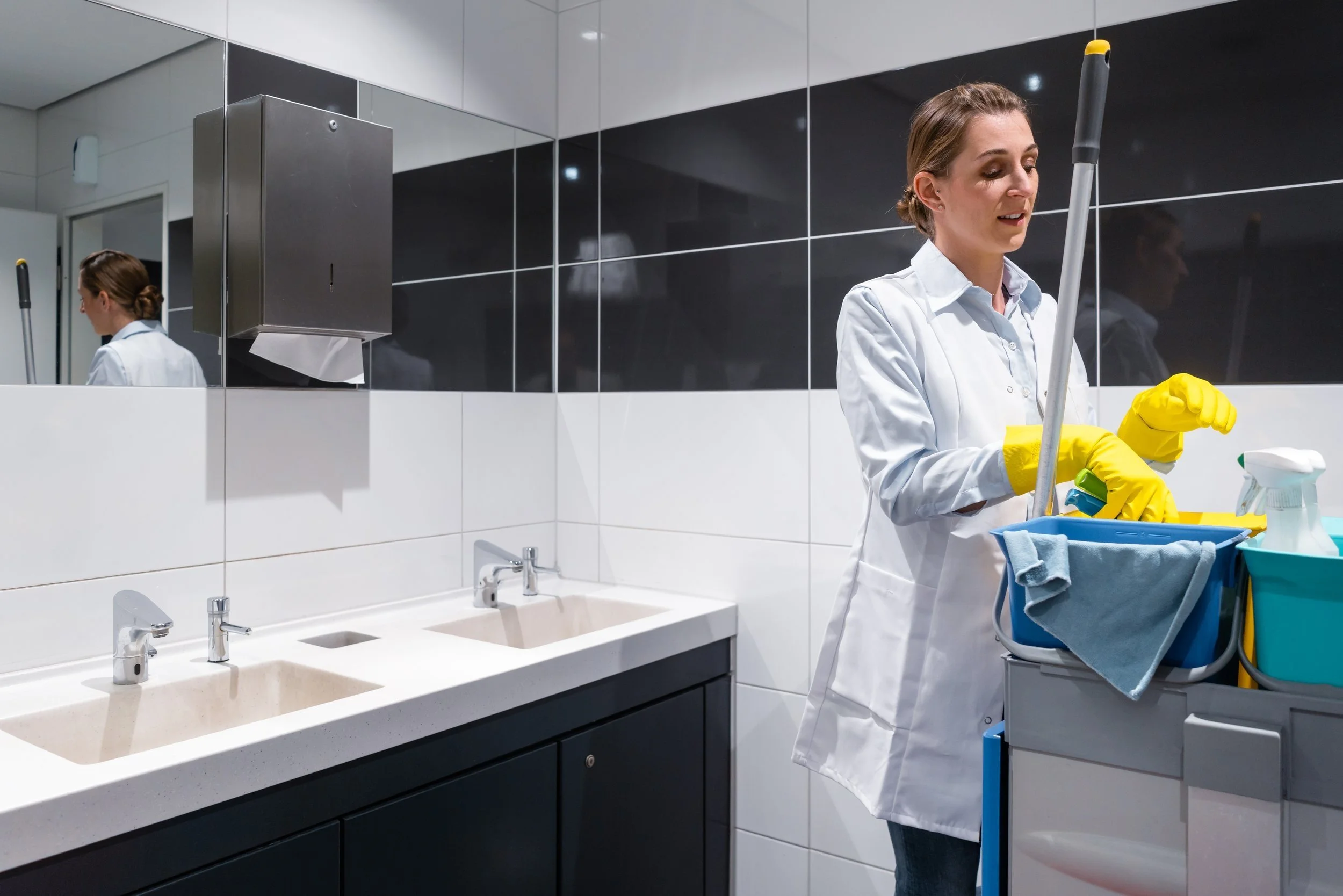
What Is Commercial Cleaning (and How Is It Different from Residential Cleaning)?
Commercial cleaning focuses on non-residential environments, offices, schools, medical practices, industrial buildings, churches, and multi-tenant properties. Teams are trained to work around business operations, adhere to building protocols, and meet hygiene standards for shared spaces and high occupancy.
Unlike residential cleaning, commercial work relies on professional tools (such as HEPA vacuums and auto-scrubbers) and EPA-registered disinfectants suited to offices, educational settings, healthcare suites, and production floors. Processes emphasize safety, security, and consistency at scale.
Within Atlanta commercial cleaning, janitorial services are the routine, ongoing tasks, trash removal, dusting, vacuuming, restroom sanitation, and touchpoint disinfection. Specialty services address deeper or periodic needs like carpet and floor cleaning, high-dusting, professional day porters, and healthcare-grade disinfection. Local organizations, from Atlanta offices to warehouses and schools, should expect a provider who can deliver both or coordinate trusted partners.
Key Takeaways
At a glance, here is what Atlanta organizations should expect from a capable commercial cleaning partner and how to evaluate fit:
At a glance, commercial cleaning is the professional cleaning of non-residential spaces, from offices and medical practices to schools, warehouses, churches, retail suites, and multi-tenant buildings. For Atlanta businesses, it helps maintain healthier, safer, and more professional environments while supporting daily operations.
Commercial cleaning is broader than routine janitorial work. It can include ongoing cleaning, day porter support, medical office cleaning, carpet cleaning, disinfecting services, pressure and soft washing, commercial floor cleaning, and specialized deep or restorative cleaning.
The right provider should be chosen based on your facility’s needs, not price alone. Consider your building type, traffic levels, cleaning frequency, safety requirements, access protocols, staffing reliability, communication process, and quality-control standards.
Atlanta businesses should look for a partner that can recommend the right service mix, adjust to local scheduling realities, and maintain consistent results across routine cleaning and more specialized facility needs.
How to Choose the Right Commercial Cleaning Company
If you manage an office in Midtown, a medical suite in the Perimeter, or a multi-tenant building near Buckhead, choosing the right commercial cleaning partner is a business decision that impacts health, image, and day-to-day operations. This guide walks Atlanta decision-makers through how to evaluate providers, by services, reliability, safety, scheduling, communication, and local know‑how, so your facility gets consistent, professional results.
Keeping Atlanta Workplaces Clean: The Challenge for Local Businesses
Across the Atlanta metro area, facilities face high foot traffic, seasonal illness surges, and a climate that tracks in moisture and pollen. Whether you oversee a downtown office tower, a retail suite along Peachtree, a school in Gwinnett, or a warehouse on the Southside, keeping spaces clean and healthy is constant work, especially in lobbies, elevators, restrooms, and break rooms.
Internal teams are often stretched thin. Day porters can help, but professional-level disinfection, floor care, and quality control require trained crews, the right equipment, and a dependable schedule. That’s where a qualified commercial cleaning company in Atlanta can support your staff and maintain a consistently professional environment.
Why Professional Commercial Cleaning Matters
First impressions drive confidence. Clean lobbies, elevators, and restrooms tell clients, tenants, families, and patients that your facility is well managed. In competitive Atlanta markets, Class A offices, medical offices, and retail corridors, presentation influences leasing decisions, referrals, and repeat visits.
Health and productivity matter. Proper cleaning and disinfection reduce germs on high-touch surfaces, helping limit the spread of illness. That supports fewer sick days, steadier staffing, and better tenant and employee morale, especially during peak illness seasons.
Consistent cleaning extends the life of flooring, fixtures, and finishes. Routine maintenance and periodic deep services help preserve carpet, tile, and hard surfaces, lowering long-term repair and replacement costs. Outsourcing also frees internal teams to focus on their core responsibilities.
Stronger first impressions for clients, tenants, and visitors
Healthier workplaces through regular, appropriate disinfection
Higher productivity and morale in organized, clean spaces
Protection of capital investments in floors and finishes
Reduced workload for internal staff and managers
CDC guidance notes that routine cleaning and disinfection of frequently touched surfaces can help reduce the spread of germs in community settings, while OSHA emphasizes proper training and the use of appropriate PPE and chemical handling procedures to protect workers.
Start with Your Facility’s Needs in the Atlanta Metro
Before comparing proposals, inventory your spaces and priorities: offices, cubicles, conference rooms, restrooms, break rooms, copy areas, reception desks, production zones, and high-touch points like door handles, elevator buttons, and railings. Note traffic peaks, special risks, and image-critical areas.
Consider factors that shape scope and frequency: building size, multi-tenant setups, evening or weekend hours, and sensitive zones (server rooms, labs, or medication storage). Corporate offices, schools, medical practices, warehouses, retail stores, and churches across the Atlanta metro will each need different cleaning cadences and specialties.
Engage stakeholders, HR, operations, property management, and tenant reps, to align on expectations, budget, and access requirements. A professional provider like Pro Squared Janitorial can support a walk-through and needs assessment to translate this input into a clear, right-sized plan.
Core Services and Specialties to Look For in a Commercial Cleaning Partner
A capable Atlanta commercial cleaning partner should offer more than basic upkeep. Look for a provider that can support your facility’s day-to-day needs while also handling specialized services that protect your space, support health, and maintain a professional appearance.
For most businesses, routine janitorial services form the foundation. These services keep reception areas, offices, restrooms, break rooms, lobbies, and shared spaces clean, stocked, and ready for daily use. Busy facilities may also benefit from day porter services, with an on-site team member managing smaller cleaning needs throughout business hours.
Depending on your facility, you may also need more specialized support. Medical office cleaning requires higher standards for patient- and staff-facing environments. Carpet cleaning, hard-floor care, disinfecting services, pressure and soft washing, and deep or restorative cleaning can all help extend the life of surfaces while improving safety, appearance, and overall cleanliness.
A strong commercial cleaning company should be able to recommend the right mix of services based on your building type, traffic levels, schedule, and risk areas.
Core service: What it includes
Janitorial services: Routine cleaning for offices, reception areas, restrooms, break rooms, lobbies, and shared spaces.
Day porter services: Ongoing daytime support for busy buildings that need cleaning attention from open to close.
Medical office cleaning: Specialized cleaning for healthcare environments, supporting cleaner spaces for patients and staff.
Carpet cleaning services: Removal of built-up dirt, germs, and allergens to refresh carpets and improve appearance.
Disinfecting services: Added protection for high-touch areas and shared spaces where healthier conditions are a priority.
Pressure and soft washing: Exterior cleaning, including building washing, parking lot cleaning, roof cleaning, and graffiti removal.
Commercial floor cleaning: Care for hard floors such as tile and polished concrete, helping address scuffs, stains, dullness, and safety concerns.
Specialized cleaning services: Detail-focused, deep, or restorative cleaning for spaces that need more than a standard routine service.
Evaluating Reliability, Staffing, and Training
Reliability starts with people. Ask how crews are staffed for your square footage and frequency, whether teams are consistent night to night, and how coverage works during vacations or call-outs. Stable staffing reduces retraining and keeps standards steady.
Professionalism and safety depend on training. Confirm onboarding and ongoing instruction on equipment use, chemical handling, color-coding to prevent cross-contamination, and site-specific procedures. OSHA-aligned practices and documented checklists are strong indicators of rigor.
Look for transparency: clearly identified team members (uniforms/badges), background checks, supervision ratios, and an escalation path for urgent issues. Providers like Pro Squared Janitorial use documented attendance tracking and backup plans to maintain continuity.
Ask for proof of background checks and identification procedures.
Request a training matrix covering chemicals, equipment, safety, and site protocols.
Confirm coverage plans for absences and holidays; ask for response-time commitments.
Verify supervision ratios and who conducts inspections at your site.
Check insurance certificates and request Atlanta-area client references.
Watch for red flags: frequent crew turnover, vague answers about training, or inconsistent start times.
Products, Equipment, and Safety Practices You Should Expect
Effective disinfection requires EPA-registered products used at proper dilution and dwell times. Your provider should match chemistries to surfaces and settings (e.g., offices vs. healthcare), supply Safety Data Sheets, and avoid overuse that leaves residues or odors.
Professional-grade equipment improves outcomes and efficiency. Expect HEPA-filtered vacuums to capture fine particulates, auto-scrubbers for large hard floors, microfiber systems for better soil removal, and color-coded tools to prevent cross-contamination. Ask about green or low-odor options when sensitivities are a concern.
Safety protects people and property. Look for labeled chemical storage, PPE use, spill kits, and training aligned with OSHA and building policies. Pro Squared Janitorial follows product and equipment best practices to safeguard occupants, cleaners, and facilities.
Scheduling, Access, and Security Considerations for Atlanta Facilities
The right schedule minimizes disruption. Many downtown office towers prefer after-hours cleaning; suburban medical plazas may use early morning or split shifts; distribution warehouses near the airport often need overnight service to avoid production bottlenecks. Confirm how vendors adapt to tenant move-ins/move-outs, events, and seasonal spikes.
Security is non-negotiable. Discuss key and badge management, alarm access, contractor sign-in protocols, and restricted-area procedures for multi-tenant buildings. Ask about secure storage for chemicals and equipment on-site, plus response times for last-minute or emergency needs.
Communication, Inspections, and Quality Control
Strong partnerships run on clear communication. Expect a defined point of contact, agreed response times, and regular check-ins, monthly or quarterly, to review performance and evolving needs across your Atlanta locations.
Quality control should be visible. Scheduled inspections, documented checklists, and photo reports create accountability and make it easy to track trends. Digital apps or simple inspection forms both work if findings are shared and acted on.
Issues happen; resolution is what counts. Look for a documented process to log, track, and close service tickets, along with flexibility to adjust scope or cadence. Providers such as Pro Squared Janitorial use transparent reporting so facility teams and property managers always know where things stand.
Smart Questions to Ask Before Hiring a Commercial Cleaning Company in Atlanta
Use the following questions in RFPs, walk-throughs, or vendor interviews to quickly assess fit, expertise, and reliability for offices, medical offices, schools, warehouses, and multi-tenant buildings across Atlanta.
Tailor the list to your facility type, budget, and risk profile, and request written responses for apples-to-apples comparisons.
What types of facilities do you clean most often in the Atlanta metro, and can you share relevant references?
Can you customize a cleaning plan and frequency for our spaces and budget, including day porter options?
Which routine janitorial and specialty services do you provide directly, and which are handled by trusted partners?
How do you conduct quality checks and inspections, and how will we receive reports and photos?
Who is our primary contact, and what are your standard response and resolution times?
What is your after-hours and weekend availability? How do you handle last-minute or emergency requests?
What training do your employees receive on chemicals, equipment, and safety? Are background checks performed?
How do you manage secure access, keys/badges, alarms, and restricted areas in multi-tenant buildings?
Can you provide proof of insurance, safety documentation, and SDS for products used in our facility?
The Value of a Locally Focused Atlanta Cleaning Partner
Local knowledge improves planning and responsiveness. A team that understands I-285, GA‑400, and peak traffic windows can schedule shifts to avoid delays and maintain reliable start times across Midtown, Buckhead, Perimeter, and Decatur.
Familiarity with building norms, from Class A towers and suburban business parks to older church campuses, helps crews arrive with the right tools, floor-care chemistries, and access protocols. It also streamlines coordination with property managers and engineers in multi-tenant buildings.
A locally invested provider, such as Pro Squared Janitorial, can visit sites quickly, meet on short notice, and stay accountable over the long term. That proximity supports stronger relationships, better communication, and consistent quality across your Atlanta footprint.
Next Steps for Atlanta Businesses Seeking a Commercial Cleaning Partner
Selecting a commercial cleaning company is about reliability, safety, and fit, not just price. Start by mapping your spaces, priorities, and schedule constraints; then evaluate vendors on services, staffing and training, products and safety practices, scheduling and access, and quality control.
When you’re ready, schedule a no-pressure walk-through and proposal. Pro Squared Janitorial can help you translate goals into a right-sized, Atlanta-specific plan, whether you manage a single office, a healthcare suite, or a multi-tenant portfolio. Reach out to discuss your facility’s needs and explore a customized commercial cleaning program.
Frequently Asked Questions
How often should a commercial space be cleaned?
Cleaning frequency depends on the size of the facility, daily foot traffic, business hours, restroom usage, and the type of work being done in the space. Some offices may only need service a few times per week, while medical offices, schools, high-traffic buildings, and shared facilities often need daily cleaning or daytime porter support.
What areas should be prioritized in a commercial cleaning plan?
High-touch and high-traffic areas should come first. That typically includes entrances, lobbies, restrooms, break rooms, conference rooms, door handles, elevator buttons, shared desks, railings, and other common areas. Floors, carpets, and exterior surfaces may also need scheduled maintenance depending on use.
Do commercial cleaning companies work after business hours?
Many commercial cleaning companies offer evening, overnight, weekend, or early-morning service to avoid disrupting employees, customers, tenants, or patients. For busy locations, day porter services can also provide cleaning support during operating hours.
What should be included in a commercial cleaning proposal?
A strong proposal should outline the scope of work, cleaning frequency, staffing plan, products and equipment used, access and security procedures, quality-control process, communication expectations, and any specialized services such as carpet cleaning, disinfecting, floor care, or pressure washing.
When does a business need specialized cleaning instead of routine janitorial service?
Specialized cleaning is useful when a space needs more than day-to-day upkeep. This may include deep cleaning, restorative cleaning, carpet care, hard-floor cleaning, disinfecting services, medical office cleaning, pressure washing, or consistent day porters, move-outs, heavy use, or visible wear.